



Thinking about giving your fireplace a modern update? This DIY concrete fireplace makeover completely transformed ours on a budget.
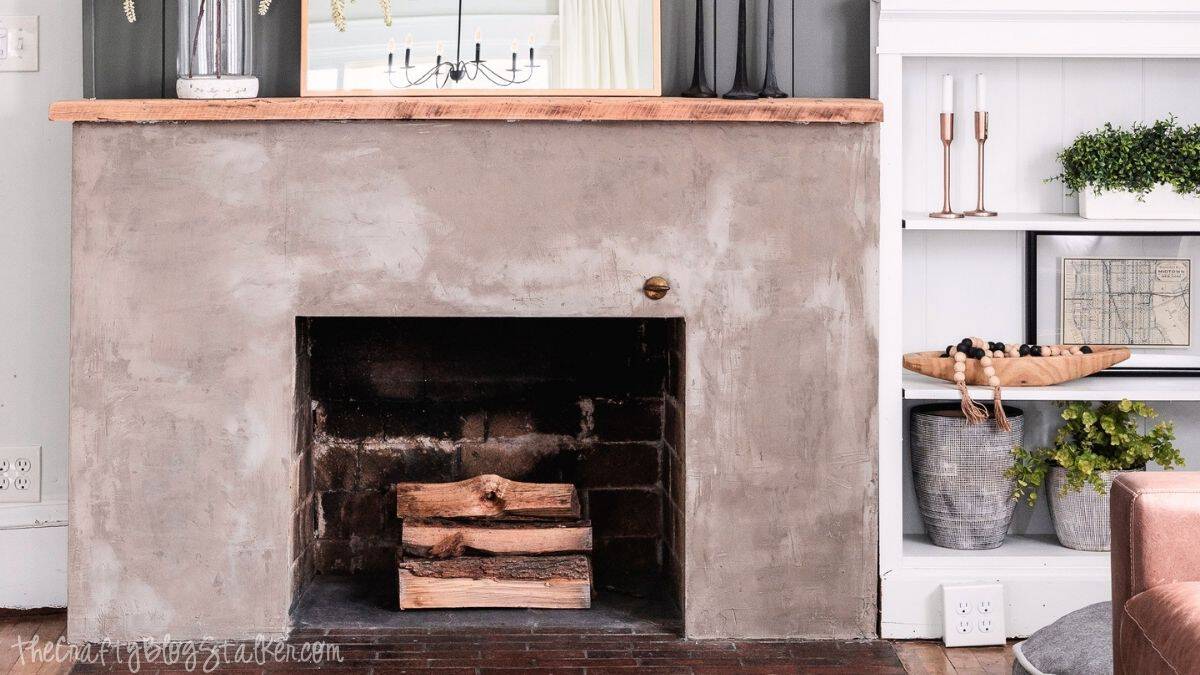
This post has been a long time coming! We tackled this fireplace makeover last fall, but I wanted to live with it for a while before sharing the tutorial.
I'm happy to report it has held up beautifully and still looks just as good as the day we finished it.
If you've been dreaming of a concrete fireplace but don't want the price tag of a complete remodel, this project is a great way to get the look for much less.
Let's start with where this fireplace began, then I'll walk you through exactly how we transformed it.
Jump to:
- Supply List
- Brick Fireplace Before
- Plan Your Fireplace Makeover
- Frame the New Fireplace Surround
- Add Framing for the Shiplap
- Install the Shiplap
- Paint the Shiplap
- Install the Cement Board
- Reinforce the Seams and Corners
- Apply the Ardex Feather Finish
- Concrete Fireplace Before & After
- Frequently Asked Questions
- More Home Improvement Ideas
Skill Level: Intermediate
Estimated Cost: $200-$400
Total Time: 2-3 days

Brick Fireplace Before
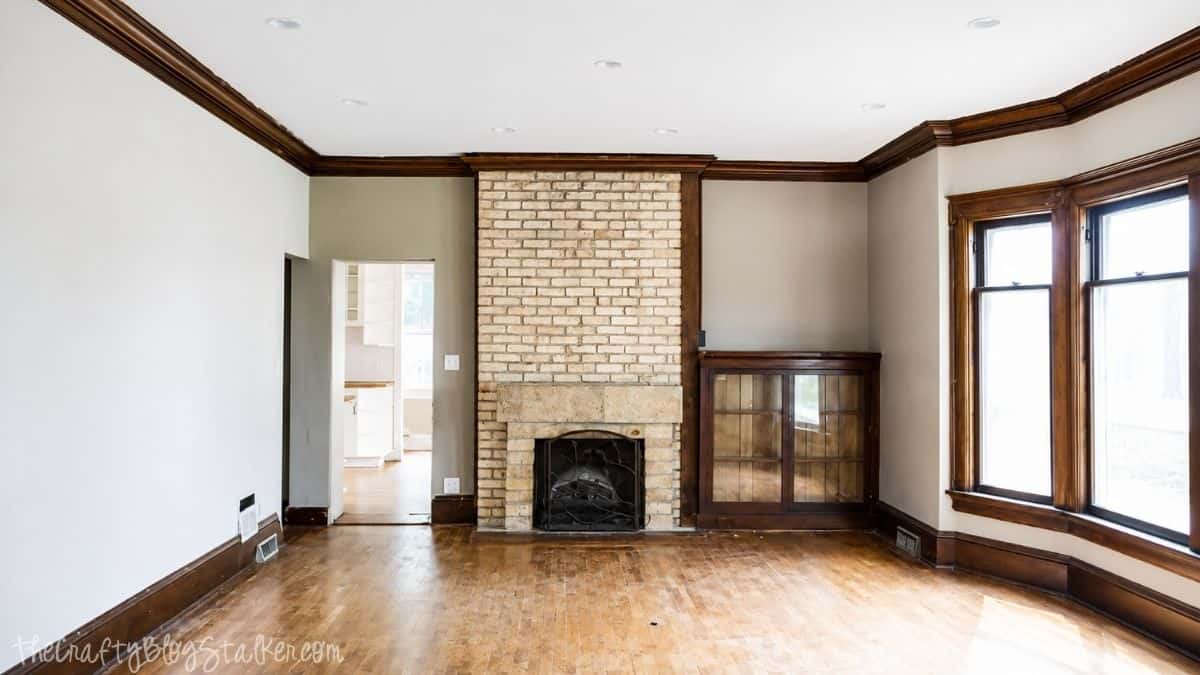
When we first moved into this house, the fireplace never felt like it belonged with the rest of the room. The biggest problem was the lack of symmetry.
A large beam on one side threw everything off visually, and once I noticed it, I couldn't unsee it.
I know some people love painted brick fireplaces, and I even had quite a few readers tell me they were sad to see the brick disappear. But this wasn't the beautiful aged brick you picture in a historic home.
The mortar was uneven, the brick was stained, and one very knowledgeable reader even told me it was construction brick that was never intended to be exposed.
I've always loved the clean look of modern fireplace surrounds with a soft concrete finish, so this project felt like the perfect opportunity to finally create the fireplace I'd been dreaming about.
Looking back at the before photos now, it's hard to believe it's the same room.
Plan Your Fireplace Makeover
Before picking up a single tool, spend some time planning the finished design.
Every fireplace is a little different, so your framing measurements will depend on your existing hearth, built-ins, and the overall look you're trying to achieve.
For our makeover, we had three goals.
First, we wanted to hide the large beam that made the fireplace feel unbalanced.
Second, we wanted the new surround to line up perfectly with the built-in cabinets on each side.
Finally, I wanted a simple fireplace mantel with clean lines instead of the bulky design we started with.
Those decisions determined the size of our framing and ultimately the finished appearance of the entire fireplace.
Taking a little extra time to sketch your design and measure everything carefully will save a lot of frustration later.
Frame the New Fireplace Surround
The first step is always cleaning.
Remove dust, cobwebs, loose debris, and any other material from the existing brick. Starting with a clean surface makes every step afterward much easier.
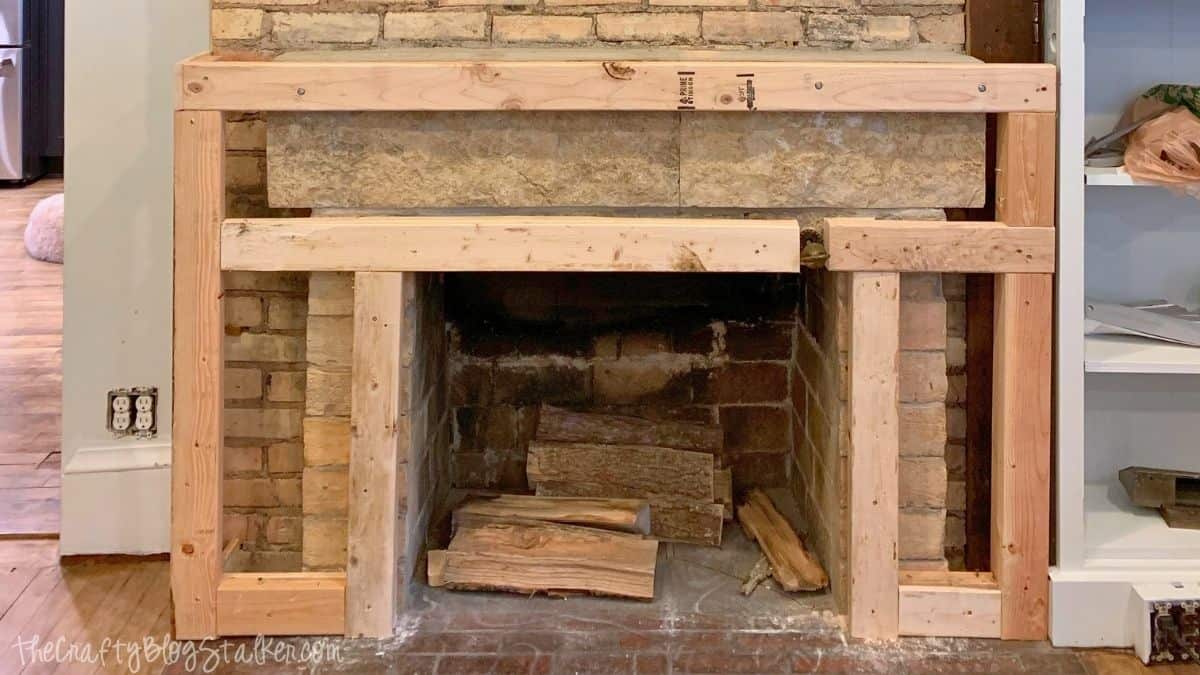
Once everything was clean, we began framing the new surround.
We attached 2x4s directly to the brick using brick anchors and a hammer drill. Because every fireplace is different, your framing may not match ours exactly. The important part is building a sturdy frame while accounting for the thickness of the cement board that will be installed later.
As we built the frame, we continually checked everything with a level to make sure the finished fireplace would be straight and square.
This is also the stage where you determine the depth of your surround. I wanted a smooth, modern face with a small ledge for the fireplace mantel, so we framed accordingly.
Even though no one will ever see this framing once the project is complete, it's the foundation for everything that follows.
Taking your time here pays off later.
Add Framing for the Shiplap
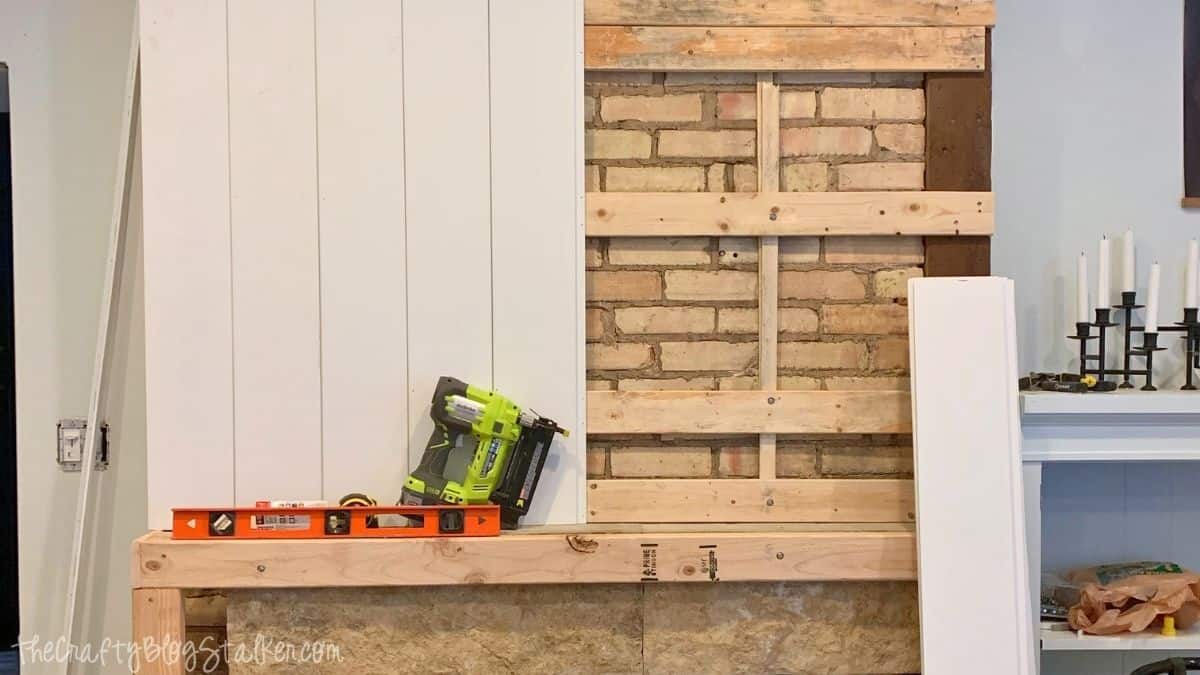
Once the lower portion of the fireplace was framed, we moved to the upper section where I planned to install vertical shiplap.
Our brick wasn't perfectly flat, so we added vertical shims in several places before installing horizontal boards across the brick.
Those horizontal boards created solid attachment points for the shiplap.
Since we already had everything opened up, we also installed extra blocking inside the wall anywhere I thought I might eventually hang artwork, floating shelves, or heavier decorations.
It's one of those little things that only takes a few extra minutes now but makes decorating much easier later.
If you're planning to mount a television above your fireplace, this is also the perfect time to add additional support behind the wall.
Install the Shiplap
After the framing was complete, installing the shiplap went fairly quickly.
Each board was secured with a finish nailer before filling the nail holes and lightly sanding everything smooth.
The only part that required a little extra planning was deciding how to finish the outside corners.
There are several good options.
You can miter the corners at a 45-degree angle for a seamless appearance.
You can trim away the tongue and groove so the edges meet cleanly.
Or you can install a vertical trim board where the shiplap meets the side of the surround.
The best option depends on your fireplace's style and how far your surround extends into the room.
Whichever method you choose, dry fit everything before reaching for the nail gun.
That extra step helps eliminate surprises and creates cleaner-looking corners.
Paint the Shiplap
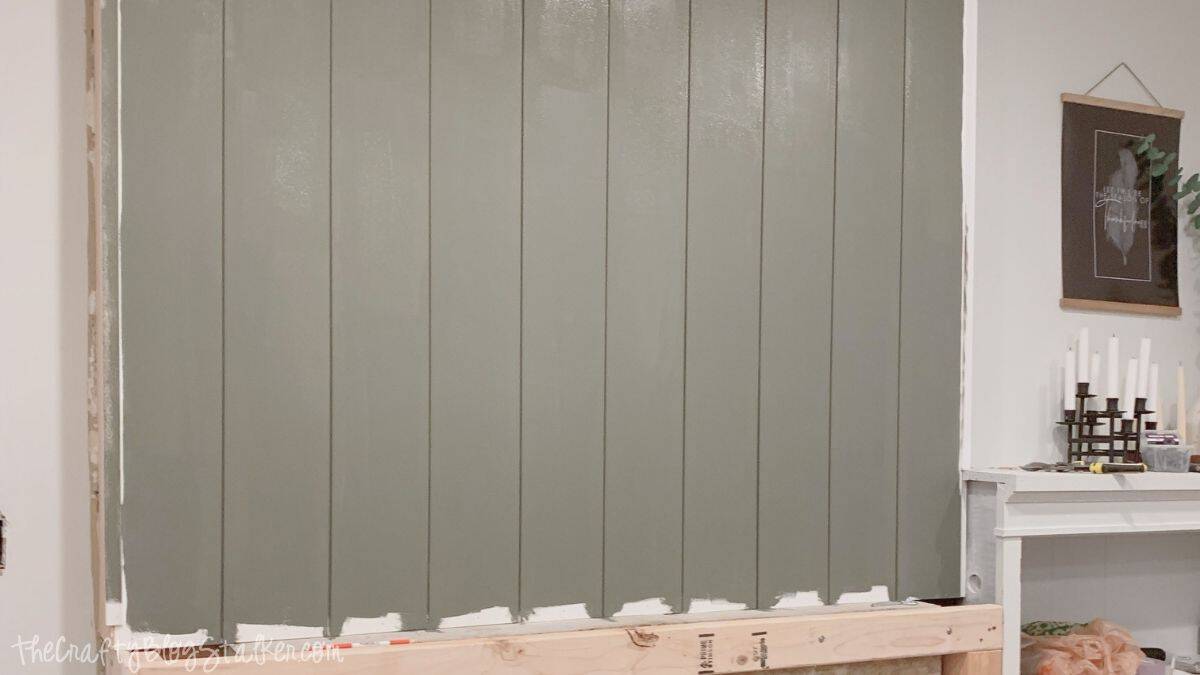
This step could absolutely wait until the very end.
But if you're anything like me, once the room starts coming together, it's hard to resist seeing what it'll look like.
I hadn't completely settled on my final color yet, but I couldn't help myself.
I rolled on a coat of paint just to get a better idea of how everything would look together.
Seeing the white shiplap against the new framing made the entire project start to feel real, and it gave me the motivation to keep going.
At this point, the fireplace already looked dramatically different, even though the faux concrete finish hadn't been added yet.
Install the Cement Board
With the framing complete, it was finally time to start creating the new fireplace surround.
Cement board provides a durable surface for the Ardex Feather Finish to bond to, making it an important step you don't want to skip.
Measure each section and cut the cement board by scoring it several times with a utility knife. Once you've cut through the surface, snap the board along the score line. It's much easier than sawing through it, and you'll create far less mess.
As you install each piece, pay attention to the factory edges. Most cement board has slightly tapered edges, making it easier to hide seams later. Position those edges together whenever possible.
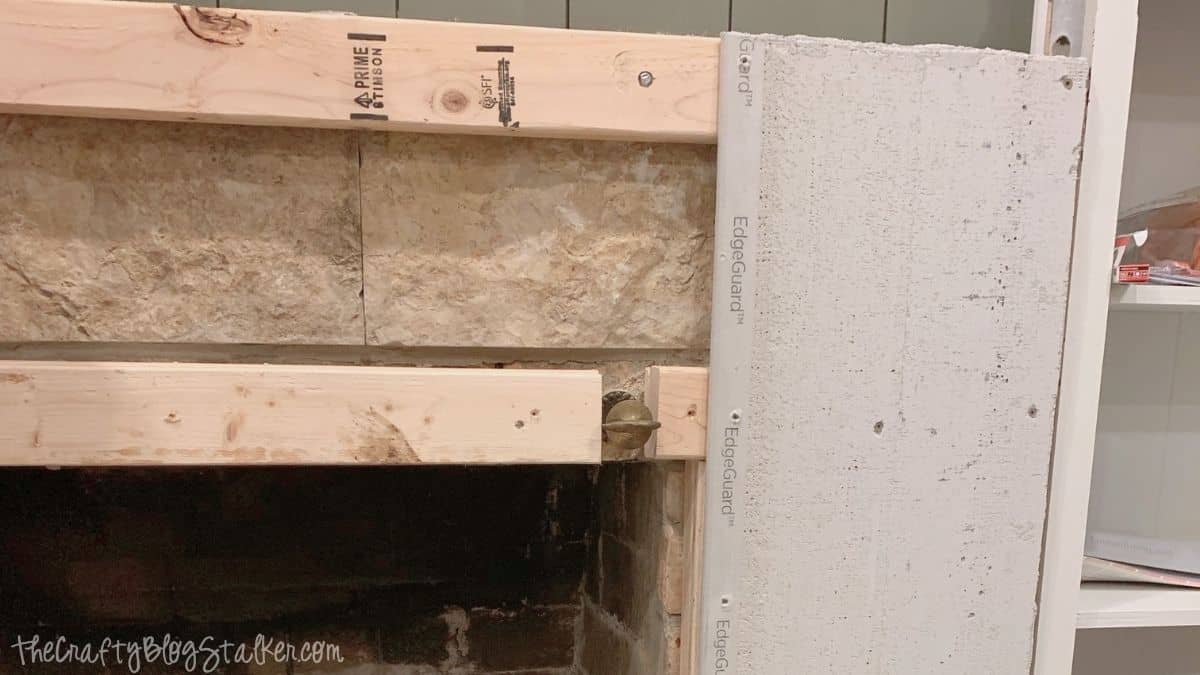
Secure each panel with cement board screws, using the proper length for your board's thickness. Drive the screws so they're flush with the surface without breaking through the outer layer.
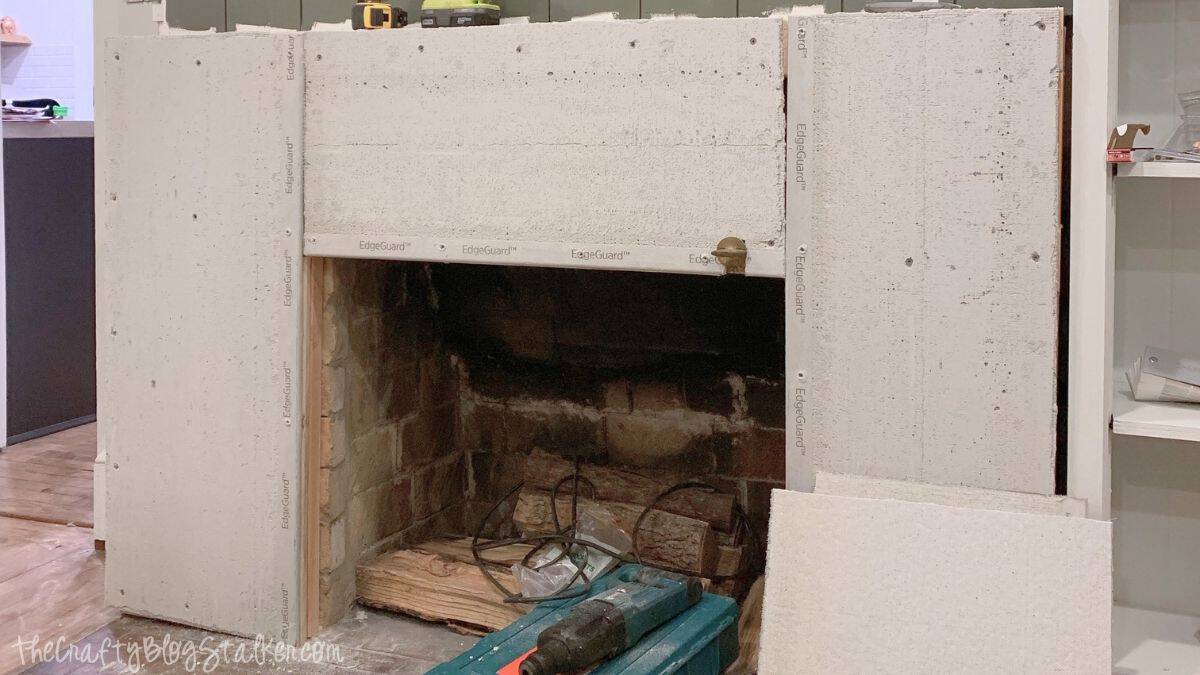
Don't stress if the outside corners aren't perfect. They'll be covered with corner bead in the next step, so small gaps won't be noticeable once everything is finished.
By the time all of the cement board is installed, you'll finally be able to see the new shape of your fireplace come together.
Reinforce the Seams and Corners
Before applying the faux concrete finish, you'll want to strengthen every joint.
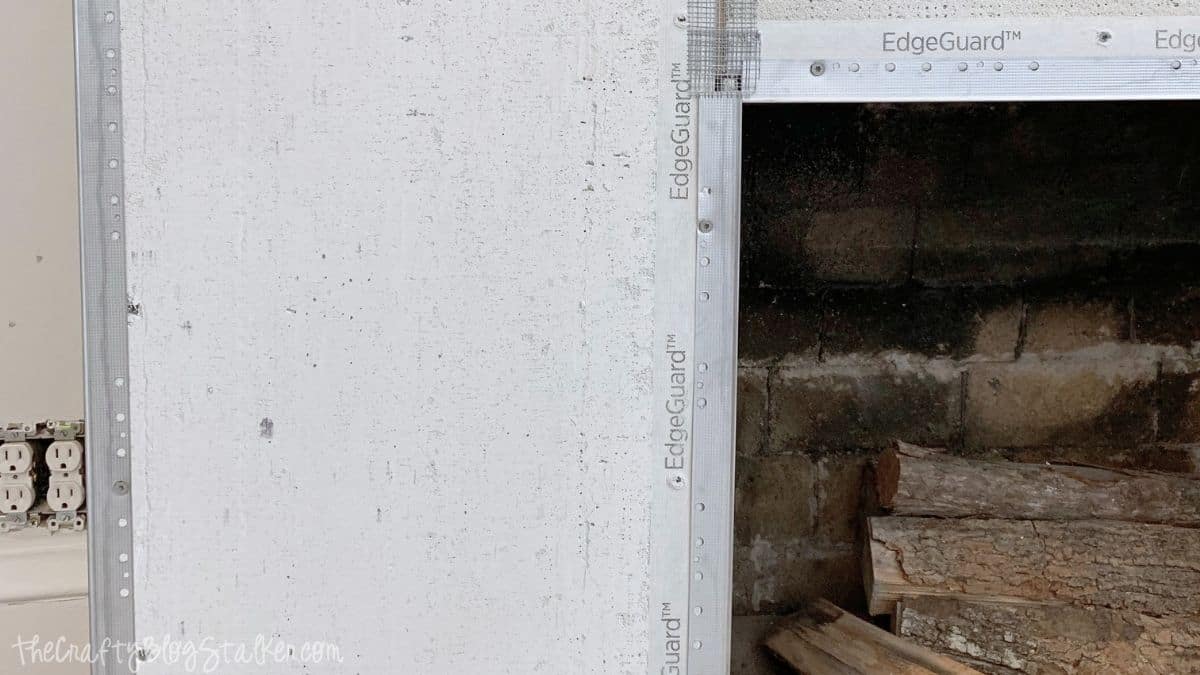
Start by applying cement board mesh tape over every seam. This tape is designed specifically for cement board and helps prevent future movement from showing through the finished surface.
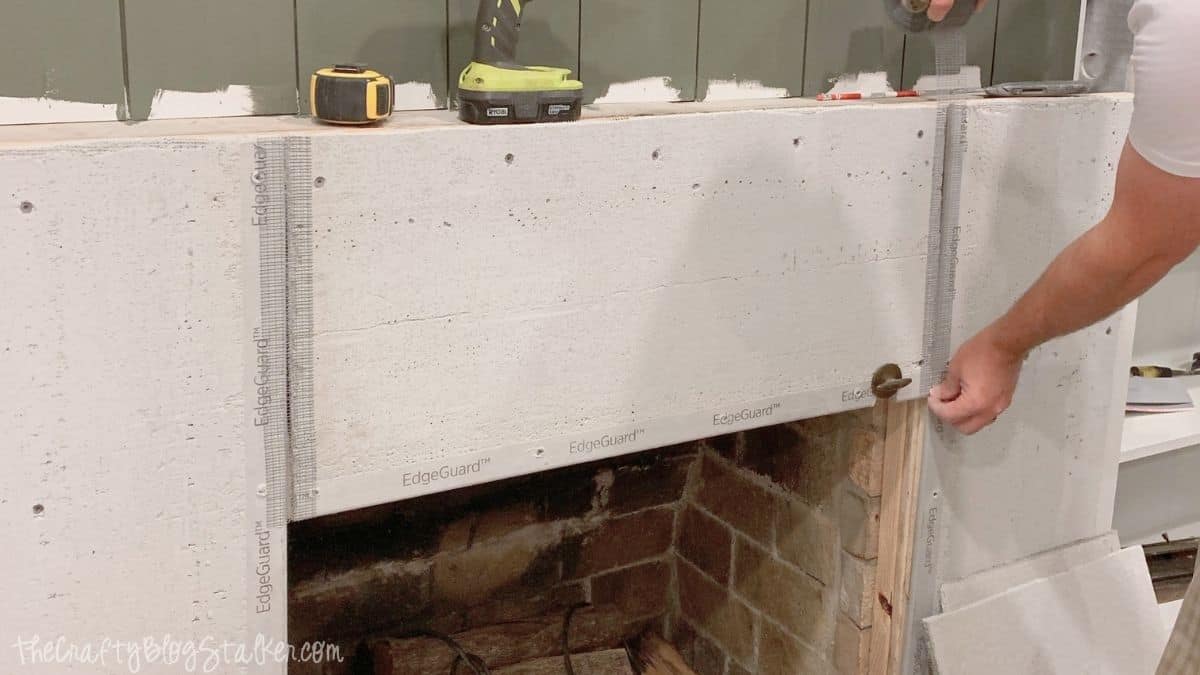
Next, install metal corner bead on every outside corner using the same cement board screws.
Corner bead does two important jobs. It creates crisp, straight corners while also protecting them from everyday bumps and dings.
Once the seams are taped and the corner bead is installed, the fireplace is ready for its concrete finish.
Apply the Ardex Feather Finish
This is where the transformation really begins.
Ardex Feather Finish creates a realistic concrete appearance without pouring actual concrete over the fireplace. The finished look has beautiful natural textures while remaining much lighter than traditional concrete.
If you've ever skim-coated drywall, the application feels very similar. The biggest difference is that Ardex sets much faster, so you'll want to work in small batches.
Follow the mixing directions on the bag. I chose to mix mine slightly thinner than recommended because it spread more smoothly across the cement board. I didn't add much extra water, just enough to improve the workability.
Using a drywall taping knife, spread a thin coat across the entire surround.
Don't worry about making the first coat perfect.
In fact, it shouldn't be.
The goal is simply to build the surface gradually.
Trying to apply one thick coat usually creates more work than it saves. Thin layers are easier to smooth and control, and produce a much more natural-looking finish.
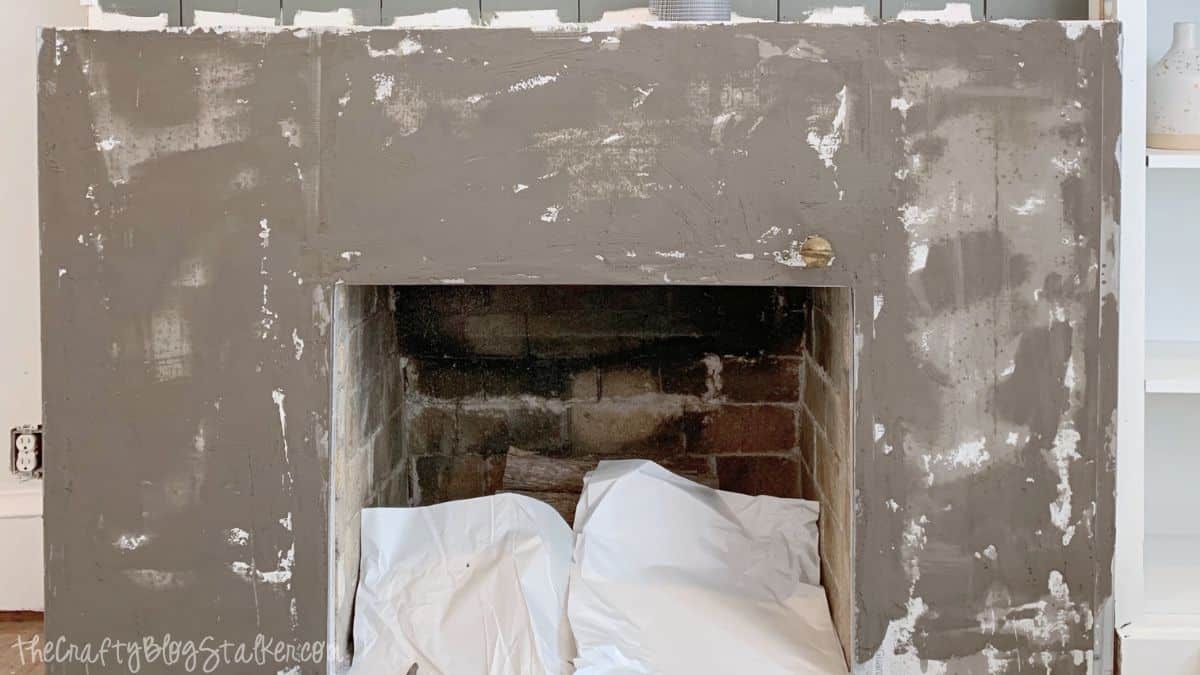
I ended up applying three to four complete coats across the fireplace before I was happy with the final appearance.
Each coat added a little more depth and character until the surround looked like solid concrete.
Create a Natural Concrete Finish
One of the reasons I love Ardex Feather Finish is that perfection isn't the goal.
Real concrete isn't perfectly smooth or perfectly uniform. It naturally contains subtle color variation and organic movement.
Those little imperfections are exactly what make the finished fireplace look authentic.
Instead of applying every pass in the same direction, vary your strokes as you work. Changing directions creates soft movement throughout the surface and prevents obvious repeating patterns.
As each coat dries, step back every so often and look at the fireplace from across the room.
Viewing the project from a distance helps you spot areas that need a little more blending while keeping you from overworking the surface
Smooth the Final Coat
When I reached my final coat, I switched from focusing on coverage to refining the finish.
After applying the Ardex, I let it begin setting for a short time before gently wiping the surface with a damp grout sponge.
The sponge softens harsh knife marks without removing all of the natural texture.
A little later, after the Ardex had firmed up even more, I lightly went over the surface again.
That second pass blended everything beautifully while still allowing subtle movement to remain.
This simple step made the biggest difference in creating the soft, concrete appearance I was hoping for.
If you still notice an area that needs attention after everything has completely dried, you can lightly sand it.
Just be prepared for a lot of fine dust.
Personally, I recommend trying the damp sponge first because it creates far less cleanup and gives excellent results.
Concrete Fireplace Before & After
Once all of the concrete work was finished, we completed a few final touch-ups, caulked the seams, and installed a simple wood fireplace mantel.
Can you believe these photos are of the same fireplace?
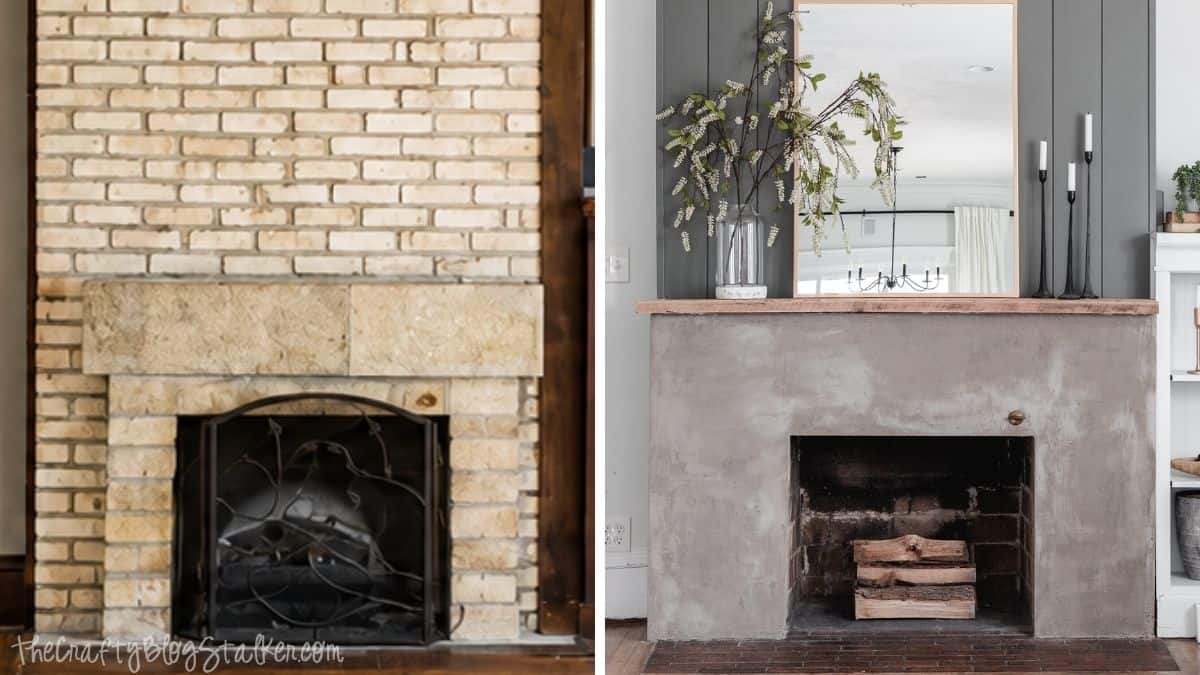
The transformation completely changed the feel of our living room. What was once an outdated brick fireplace with an awkward layout became a clean, modern focal point that works in every season and with every decorating style.
One of the unexpected benefits of waiting so long to publish this tutorial is that I can share how well it has held up over time.
After more than a year of daily life, holiday decorating, and rearranging mantels more times than I can count, I'm happy to say the finish still looks fantastic.


I haven't experienced any peeling, chipping, or noticeable wear. The durability of the Ardex Feather Finish has honestly impressed me. If I were starting over today, I wouldn't change a thing.
The soft concrete finish has enough texture to feel warm and inviting while still giving the fireplace a clean, timeless appearance. It has become one of my favorite DIY projects because it completely transformed the room without the cost of replacing the entire fireplace.
If you've been collecting inspiration for fireplace surrounds, I hope this project shows that you don't have to spend thousands of dollars to create a custom look.
Frequently Asked Questions
For this project, I installed cement board over a wood frame before applying the Ardex Feather Finish. This created a smooth, stable surface and allowed me to completely change the shape of the fireplace surround at the same time.
This was one of my biggest concerns before starting the project. After living with the fireplace for more than a year, I haven't noticed any cracks in the finish. Proper framing, securely attached cement board, and several thin coats all help create a durable surface.
Always follow the manufacturer's recommendations and your local building codes. Our Ardex finish is applied to the decorative surround and does not extend into the firebox. If you have a wood-burning fireplace, make sure any materials you use meet the proper clearance requirements.
Yes. This method works well on many different fireplace surrounds. Since every fireplace is built differently, you may need to adjust the framing to fit your layout, but the overall process remains the same.
Not necessarily. If you're comfortable with basic framing and using common power tools, this is a very achievable DIY project. If structural changes or gas lines are involved, it's always best to consult a qualified professional.
Need Help Planning Your Fireplace Makeover?
Click a button below to ask AI what home decor style works best with this fireplace design.
More Home Improvement Ideas
Explore more home improvement ideas to update your space with budget-friendly tutorials and step-by-step guides.

Hi, I'm Katie!
I'm so glad you're here. Want to make something fabulous? I'm here to help!
Sheila A Ghiglieri
No Pin button? Am I doing something wrong? Thanks for sharing wonderful project!!
Sheila
Katie Adams
Thanks Sheila! You should just be able to hover over the image and it pops up in the upper left corner. Let me know if you still don’t see it.
Barb
Love the makeover, but I can't find a pin button either.
Kim K Bolyard
The fireplace looks amazing. Could you tell me where you got the white open shelf cabinet to the right of the fireplace. been looking for something like that in my living room.
Thanks
Kim
Wendy Krieger
What color is the green paint?? I Love IT.
Kippi
Wow! Your fireplace makeover is a great idea! I like how modern it turned out.
Have a great week,
Kippi
Cindy@CountyRoad407
That is crazy cool! I love how it turned out. Y'all have some serious gumption! Kinda jealous over here. Pinned!
Katie Adams
Thanks so much!
Rachel Swangim
Beautiful makeover. What color is the shiplap painted?
Katie Adams
Thank you! It's Called Cast Iron from Sherwin Williams. 🙂
Julie Briones
What a gorgeous makeover of your fireplace! LOVE the shiplap look with the concrete surround!
Katie Adams
Thank you!
Sarah Manson
omg Katie you've done it again! that shiplap is to die! i've been admiring your work a while now tbh. started out w a dresser myself over the quarantine heheh i hope one day soon i'll have the courage to tackle more challenging projects like yours on here
sarah
Leanna
This makeover is stunning. Its so inspiring to those with meh fireplaces. Love this.
Alex
Out of curiosity, what width of shiplap did you use (1x6) ? Also, what are the approx. dimensions of the fireplace? We are trying to do this exact project! Thank you!
Sam
How did you get the variation in color? I’m in the process but the color is pretty consistent. I like your variation.
Jen in Nashville
I was wondering the same thing! This looks amazing and I want to either try it myself or have someone do it, but I want the variations in color/texture that Katie achieved!
Jennifer
Absolutely beautiful! You are very talented. I’m thinking of doing something similar to our fireplace, but I’m afraid I won’t be able to use it. Can you still use your fireplace? Thank you, Jennifer
Rachel
This looks amazing! Did you seal the concrete with anything once it dried? A clear coat of any kind?
Emily Stanley
I love this!! Could you please provide the dimensions of the fireplace? I am looking to redo my fireplace but struggling to determine how far out I should take the concrete. Also, did you build the white shelving to the right? It looks great! I would love more information about that.
Thank you!!
Emily
Susie
I love the fireplace! Can the Ardex product be applied directly to tile?
Steph
Hi! In your estimation, how difficult would it be to remove this, and is the structure underneath unharmed? The people who renovated/flipped my 1935 craftsman seem to have covered up the original art-deco inspired fireplace surround with this kind of method, which is nice, but not really my vibe (or the vibe of the house itself).
Paty
Hello! I love your fireplace! We are trying to make something similar. What kind of board do you use for the mantel? Thank you!
Anna
This looks great, Sheila. Do you use your fireplace? Is the board and cement fire and heat proof? We have a log burner, so our fireplace gets quite hot.
Thanks
Sarah Rusby
the cement thinset is fine, the Hardibacker is does have wood fiber in it and is considered fire resistant when covered with tile, but their website left me wondering, it's a little vague the way it's worded and sounded like you shouldn't reduce the clearance to combustable materials. So I'm not sure what that means regarding whether it should be within the distances where combustable materials are prohibited.
Sarah Rusby
I was a little worried about the wood framing/combustible materials at 0" from the firebox entrance. Code is typically uniform across the US becasue it's based on the national fire protection rules, at typically 6" from the opening, and increasing 1/8" per inch with every 1/8" protrusion from the face. If you use it as a fireplace please have an extinguisher handy and don't leave it unsupervised. Also, if you sell without fixing it, please disclose so that you don't end up liable for a mishap. If you disclose, it's typically not your issue anymore, but you may want to consult a real estate attorney.